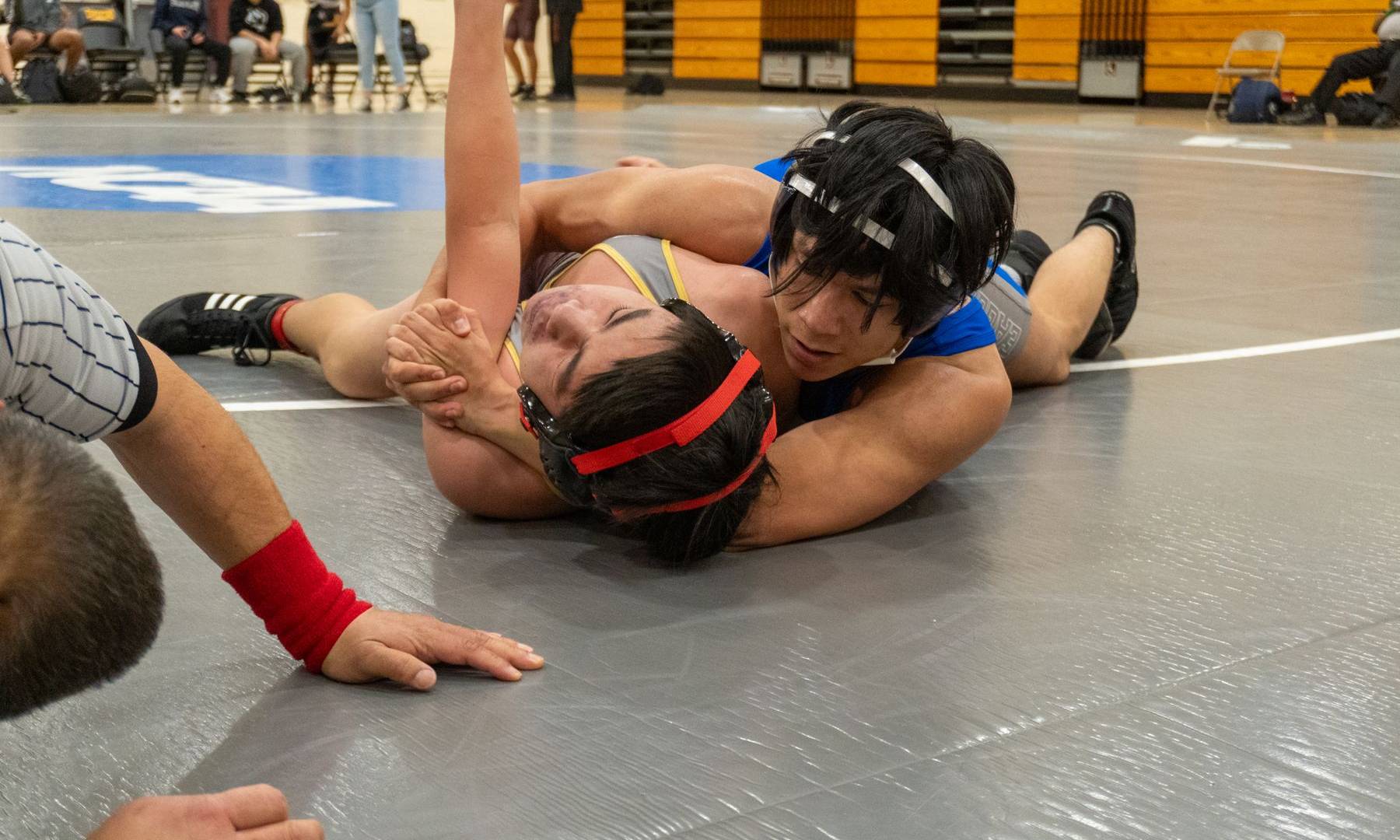
The background behind this
Dr. Dan Neff:
- Coached 12 NCAA All-Americans and one NCAA National Champion
- Wrestled at the Olympic Trials
- Coached at Division 1 level
- Serves on the USA Wrestling Medical Staff
In his words: "We see a lot of athletes in our clinic and my wrestling and coaching background really helps me understand where I need to get the athlete to be successful upon their return to sport."
That is the part that matters. A clinician who has never wrestled will get you out of pain. Someone who has competed and coached understands what a third period actually demands, what weight cutting does to a body, and what it means to a wrestler to miss districts.

Why wrestling injuries are different
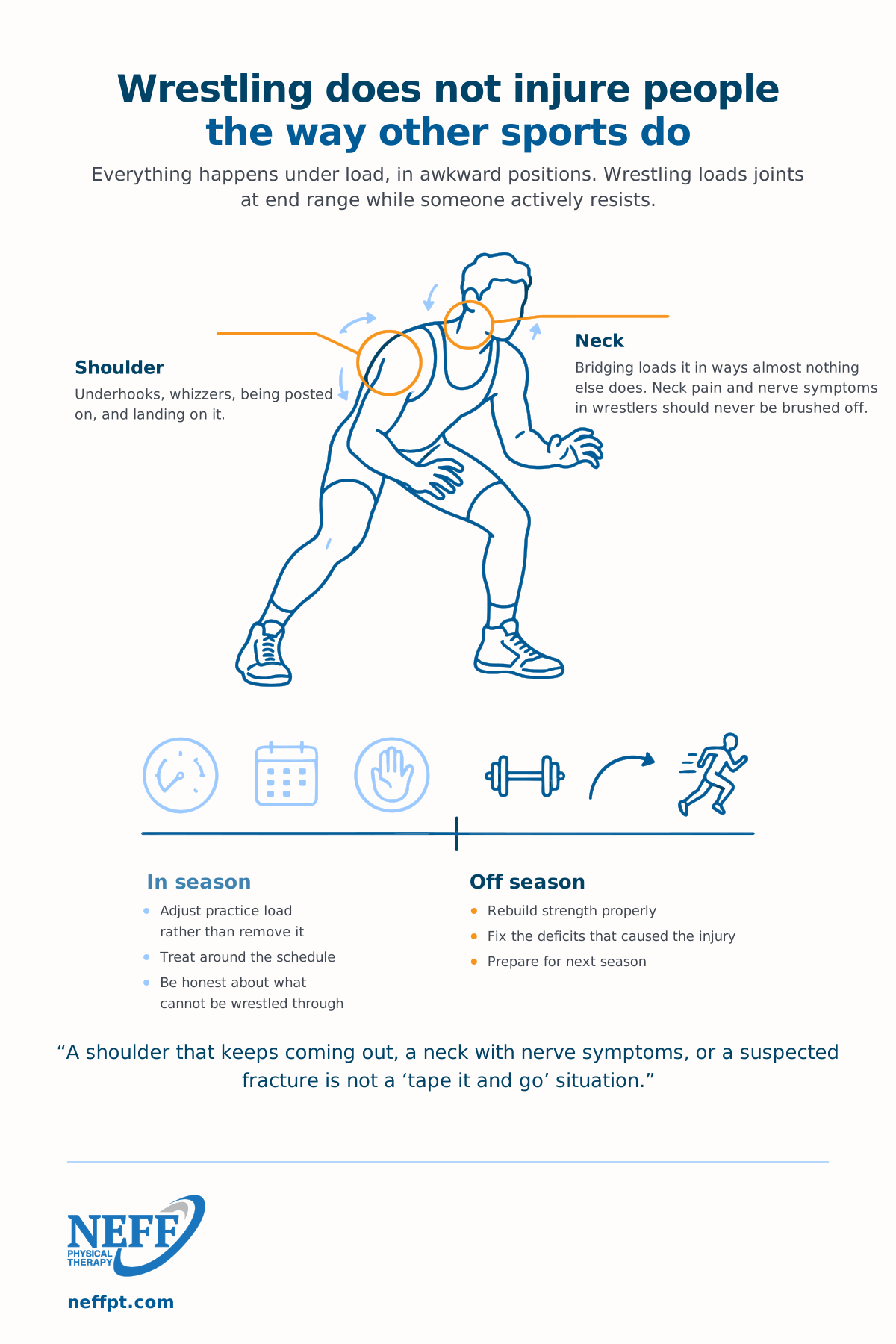
Everything happens under load, in awkward positions. Most sports injure people in predictable ways. Wrestling loads joints at end range while someone actively resists.
The shoulder takes constant punishment. Underhooks, whizzers, being posted on, and landing on it. Shoulder instability and dislocation rates in wrestling are among the highest in any sport.
The neck is a working structure. Bridging loads it in ways almost nothing else does. Neck pain and nerve symptoms in wrestlers should never be brushed off.
Weight cutting affects recovery. Dehydration and restricted eating impair tissue healing, raise cramping and injury risk, and blunt training adaptation. Any rehabilitation plan that ignores it is incomplete.
The season is relentless. Two matches in a day, tournaments across a weekend, and a culture of wrestling through things.
What we treat most in wrestlers
Shoulder Instability and dislocation are the classic wrestling injuries. Also AC joint separations from landing on the point of the shoulder, labral tears and rotator cuff problems.
Recurrence after a first dislocation is high in young athletes, so what happens after that first one matters a great deal.
Neck Neck pain from bridging and contact, and pinched nerves causing arm symptoms. Burners and stingers are common and are worth assessing properly rather than shaking off.
Knee ACL, MCL, LCL and meniscus injuries from scrambles, sprawls and getting twisted up. Prepatellar bursitis from mat contact.
Elbow and wrist Hyperextension injuries, ulnar nerve problems from repeated pressure, and thumb ligament injuries from grip fighting.
Lower back Low back pain from lifting under load in poor positions. Back pain in a young wrestler doing repeated extension warrants proper assessment rather than being dismissed as a strain.
Muscle strains Hamstring, groin and calf strains, and ankle sprains from scrambles.
In-season versus off-season
The plan changes depending on where you are.
In season, the goal is usually keeping you competing safely while managing the problem. That means adjusting practice load rather than removing it, treating around the schedule, and being honest about which injuries genuinely cannot be wrestled through.
Off season is where the real work happens: rebuilding strength properly, fixing the deficits that caused the injury, and preparing for the next season rather than patching up the last one.
There are injuries you should not wrestle through, and we will say so plainly. A shoulder that keeps coming out, a neck with nerve symptoms, or a suspected fracture is not a "tape it and go" situation.
Getting back on the mat
Wrestling demands more before a return than most sports, because you cannot control what an opponent does to you.
Before we clear you, we want to see:
- Strength close to the uninjured side
- Full range in the positions your weight class actually requires
- Control under load, not just in isolated testing
- Live drilling tolerated without symptoms
- Confidence in the position that injured you
That last one is not soft. An athlete who protects a shoulder mid-scramble gets hurt somewhere else.
For coaches and parents
We are happy to write down what a wrestler can and cannot do, so practice can be adapted rather than the athlete sitting out entirely.
We will also be straight about the things that need a physician or a surgeon. Wrestling has a culture of toughing things out, and part of our job is being clear about where that stops being brave and starts being costly.
Common questions
Find the clinic closest to you
Let's get you moving again
You don't need a doctor's referral to get started. In Pennsylvania we can evaluate you and begin treatment straight away, so you're not sitting on a waiting list for a physician appointment before anyone even looks at the problem.
Some insurance plans still want a referral on file before they'll cover treatment. Give us a call and we'll check your plan with you, so there are no surprises later.
And you'll see the same doctor every visit. Your Doctor of Physical Therapy leads every appointment, and you get hands-on treatment every time. It's how physical therapy is supposed to work.
Still not sure we're the right fit? Call and ask. We'd genuinely rather point you toward the right person than book you an appointment you don't need.
This page is general health information, not medical advice. It cannot tell you what is causing your pain. For that you need someone to examine you in person. If your symptoms are severe, getting worse, or following an injury, talk to a doctor or a physical therapist.